Festivals & Ritual
Days for the dead: how communities keep the calendar with them
Annual observances for the dead exist in most societies, and they cluster in the same parts of the year for reasons that are partly agricultural and partly about what a community needs.
Almost every society has a time in the year when the dead are attended to collectively. Graves are cleaned and visited. Food is prepared and shared, sometimes offered. Names are spoken aloud. In many traditions the dead are understood to be present, or nearer than usual.
The observances differ enormously in tone — some sombre, some explicitly festive — and the underlying structure is consistent.
The autumn cluster
A striking number of these observances fall in autumn, in temperate zones of the northern hemisphere.
Various European traditions around the start of November. The Mexican observance in early November, which combines Indigenous Mesoamerican practice with Catholic calendar dates and has become one of the most visible in the world. East Asian ghost festivals in the seventh lunar month. Various harvest-adjacent observances elsewhere.
Several explanations are usually offered and the plainest is agricultural. Harvest is finished, food is available for feasting, and the community has time. It is also the point in the year when the visible world is dying back, which supplies an obvious association.
The Southern Hemisphere and tropical traditions do not follow this pattern, which supports the agricultural reading rather than any universal symbolism about autumn.
What the observances involve
Cleaning and repair of graves. Almost universal, and practically necessary — a year of weather does real damage. The tomb sweeping festivals of East Asia are named for exactly this.
Food. Either offered to the dead, shared among the living at the grave, or both. Frequently specific dishes made only for the occasion, and often the favourite foods of individuals being remembered.
Naming. Reading lists of the dead aloud, or reciting genealogies. The naming is the mechanism by which a community keeps a shared record of who belonged to it.
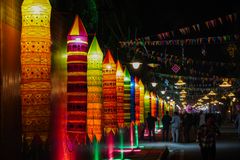
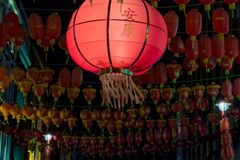
Light. Candles, lamps, fires. Extremely widespread, and usually explained as guiding the dead.
Return. Many traditions treat the dead as visiting during the observance, with houses prepared for them — a place set at the table, a door left open, a bed made.
What it does for the living
It schedules grief. This is more useful than it sounds. Continuous mourning is not sustainable and forgetting is not acceptable, and a fixed annual occasion resolves the tension. There is a day for it, and on the other days one gets on.
It makes grief collective. Everyone is doing it at once. A bereaved person is not marked out as different, and the community's shared participation acknowledges the loss without requiring anyone to raise it.
It maintains genealogical knowledge. In societies where descent determines land rights, obligations and status, knowing exactly who your ancestors were is practically consequential, and an annual recitation is an effective transmission mechanism.
It brings dispersed families together. In many places the observance is the occasion that draws people back to a home village, which sustains connections that would otherwise lapse.
It maintains the physical sites. Cemeteries and family tombs are maintained because there is an annual occasion requiring it.
The variation in tone
Outsiders frequently misread the festive versions.
Observances that involve music, food, drink and laughter at gravesides are not disrespectful within their own traditions — they are the opposite, an assertion that the dead remain part of the community and are entitled to be included in ordinary sociability.
The sombre model is one option among several rather than the natural human response to death, and reading celebratory observances through it produces consistent misunderstanding.
Where the practice is under pressure
Urbanisation separates people from ancestral burial places, sometimes by thousands of kilometres. Migration does the same across borders, with the additional difficulty that graves may be inaccessible.
Cremation, increasingly common in many countries for cost and space reasons, changes the physical focus — there may be no grave to visit, which some traditions have adapted to and others have not.
And in societies where extended family contact has thinned, the annual gathering that the observance organised has fewer people to gather.
What appears in its place
Where formal observances have weakened, other forms have appeared: roadside memorials at accident sites, online memorial pages, anniversaries marked privately, and the gradual accumulation of digital traces that outlast the person.
These are improvised rather than inherited, and they do some of the same work — a place to go, a date, a way of saying a name in public.
What they generally lack is the collective and scheduled element, which means grief becomes individual again. Whether that matters is arguable, and the persistence of these observances across so many unrelated societies suggests that the collective version was solving something.
Also by Anahera Wetere
- What a heritage listing does to a placePlaces
- Lullabies are frequently not comfortingFolklore
- When one employer is the whole townPlaces
- The gift that has to be returnedFestivals & Ritual