Places
Mountains that are not for climbing
A number of prominent peaks around the world are treated by the people who live beneath them as places where you do not go, and the resulting disputes with visitors have been long-running.
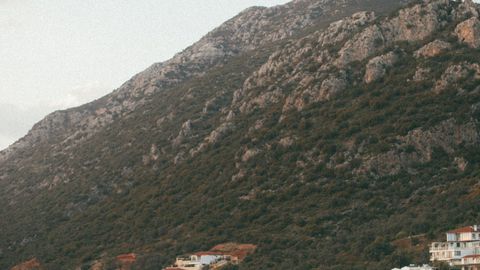
Mountains carry religious significance in an enormous number of traditions. Some are visited by pilgrims; some are approached only to a certain point; some are not to be ascended at all.
Where those mountains are also attractive to climbers and tourists, the result is a conflict that has played out repeatedly and is being resolved differently in different places.
Why mountains
The associations are widespread enough to be worth noting.
They are visible from a distance and dominate a landscape. Weather forms on them, which makes them appear to generate the conditions that determine harvests. They are the source of rivers. They are difficult to reach, which makes them separate. And they are permanent in a way that almost nothing else in a landscape is.
The specific significance varies enormously — a mountain may be a deity, the dwelling of one, an ancestor, the origin of a people, a boundary marker of enormous antiquity, or a place where particular events occurred.
Restricted access
Restrictions take several forms.
Complete prohibition on ascent. Several peaks are treated this way, and in some cases governments have formalised the restriction into law.
Access limited to certain people — initiated members, particular lineages, or those who have undertaken specific preparation.
Access permitted to a defined point, with the summit or a particular area off limits.
Seasonal restrictions, with access permitted at some times and not others.
Requirements of conduct for those who do go — what may be carried, what may be said, what must be left, what must not be photographed.
The recurring conflict
The pattern is consistent. A peak becomes known to climbers or tourists. Visitors arrive. The local community objects. The dispute becomes a matter for a government that may or may not be sympathetic.
The arguments made by visitors tend to be about access to nature as a universal right, about economic benefit to the region, and about the illegitimacy of restricting a public place on religious grounds.
The arguments from communities tend to be about who the place belongs to, about the actual harm caused by presence on it, and about a long history of being ignored on exactly this point.
How it has been resolved
Several approaches have been tried and the outcomes differ.
Voluntary requests not to climb, publicised at the site. These have had partial success, with compliance rates improving over time in several cases as awareness spread, and with a persistent minority ignoring them.
Legal prohibition, introduced in a number of places, sometimes after long campaigns. Effective where enforced.
Negotiated access, with permits, guides, defined routes and conditions, which allows visiting under terms set by the community and generates income.
Joint management, where the site is administered by an arrangement between a state agency and the traditional owners.
The approaches that have worked best generally involve the community having genuine authority rather than a consultative role, which is a considerably larger political question than the mountain.
The economic complication
Tourism income is frequently significant to the surrounding region, and communities are rarely unanimous.
Restricting access can mean giving up substantial revenue, and the people who benefit from tourism and the people most concerned about the site are not always the same people.
Several sites have moved toward arrangements that maintain visitor numbers while redirecting them — walks around a peak rather than up it, cultural centres, guided visits to permitted areas — which preserves income and respects the restriction. That requires investment and it has worked where the investment was made.
The broader category
Mountains are the most visible case and the same issue arises with caves, springs, rock formations, burial sites and stretches of coast.
The general shape is identical: a site of significance to a community, attractive to visitors, with a dispute about who decides.
The trend over recent decades has broadly been toward recognising community authority, driven by legal developments in several countries around Indigenous rights and by shifts in how heritage bodies operate. Progress is uneven and slow.
What a visitor can reasonably do
Find out before going whether there are restrictions or requests, from the community rather than from a guidebook.
Follow them, including the ones that are requests rather than rules, and including when the reasoning is not explained. The absence of an explanation is frequently deliberate.
Accept that some places are not available, which is a small cost against the alternative, and that a landscape does not become less interesting for containing somewhere you are not going.
Also by Anahera Wetere
- What a heritage listing does to a placePlaces
- Lullabies are frequently not comfortingFolklore
- When one employer is the whole townPlaces
- The gift that has to be returnedFestivals & Ritual