Places
Moving with the season: transhumance and the routes it wore into the land
Seasonal movement of livestock between lowland and upland pasture shaped landscapes, legal systems and settlement patterns across an enormous area, and it is disappearing quickly.
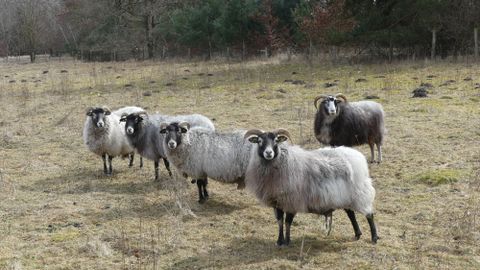
Transhumance is the seasonal movement of livestock between pastures — typically lowland in winter and upland in summer, though the pattern varies with climate.
It is not nomadism. The community has fixed settlements at one or both ends, and only some members move with the animals.
The practice is documented across the Mediterranean, the Alps, the Carpathians, the Pyrenees, Scandinavia, the Atlas, the Andes, the Himalaya and elsewhere, and in each case it has left substantial marks.
Why it works
The logic is straightforward: pasture is available at different altitudes at different times.
High pasture is under snow in winter and productive in summer. Lowland pasture is available in winter and burnt off or needed for crops in summer.
Moving animals between them uses both, at the times they are useful, and avoids the need to grow and store enough winter fodder to keep a large herd at one location.
It also spares the lowland fields during the growing season, which is why the timing is frequently precise — the animals leave when the crops go in and return after harvest, when the stubble becomes grazing and the manure goes onto the fields.
The routes
Movement over long distances required rights of passage, and those rights became formalised.
Designated droving routes, of specified width, with grazing rights along them, water points and overnight stopping places, exist across many regions. Some are legally protected and have been for centuries.
These routes are physically visible: worn tracks, characteristic vegetation, bridges built for stock, and enclosures at the stopping points.
They also acted as corridors for the movement of everything else — seeds, plants, insects, information, disease and people. Ecologists have documented droving routes as significant for plant dispersal, which makes them functional wildlife corridors and one of the reasons their protection is now argued for on ecological as well as heritage grounds.
The institutions
Transhumance requires agreements between communities who do not otherwise interact, and those agreements have to hold over generations.
Systems of grazing rights, of payments for passage, of compensation for damage and of dispute resolution developed accordingly, and several are among the oldest continuously operating institutions anywhere.
Where upland pasture was held in common, allocation rules determined how many animals each household could send — a classic common-pool problem, and one that many such communities solved and maintained for centuries through local rules and enforcement.
The social pattern
Transhumance splits communities seasonally.
Typically a minority — shepherds, herders, sometimes young people, sometimes specific families — travel with the animals and live in temporary settlements at the high pasture. In some traditions this is women's work; in others men's.
The high settlements are frequently substantial: huts, dairies, cheese cellars and enclosures, occupied for a few months each year and empty for the rest.
Those months produce their own culture — songs, calls used for managing animals and communicating across valleys, and in several regions the long-distance vocal traditions associated with mountain herding.
What the movement produced
The distinctive products of transhumant systems are the ones that can be made on a mountain and carried down: hard cheeses, cured meat, wool, and animals fattened for autumn sale.
The timing of autumn markets across many regions corresponds to the return of the herds, and a substantial part of the agricultural calendar in these areas is organised around it.
Why it is ending
The pressures are the same everywhere.
Labour. The work is hard, isolated and poorly paid, and finding people willing to spend a summer alone on a mountain is the binding constraint in most regions.
Land tenure changes and enclosure, which have cut routes and privatised commons.
Roads and motorised transport, which allow animals to be moved by lorry — faster and cheaper, and which severs the connection between the route and the practice.
Subsidy and regulatory systems designed around settled agriculture, which frequently disadvantage mobile pastoralists.
Predators returning to some regions, which has produced genuine conflict where herding practices adapted to their absence.
What is lost
Ecologically, quite a lot. Extensive grazing maintains open habitats and species-rich grassland that revert to scrub without it, and several habitats of high conservation value depend on continued grazing at the traditional intensity.
Abandonment of upland pasture in a number of regions has been associated with loss of open-habitat species and with increased fire risk as fuel accumulates.
Which has produced the slightly odd situation where conservation bodies in several countries now pay to maintain a practice that was previously an ordinary agricultural activity — because the ecosystem in question is a product of it and does not persist without it.
Also by Anahera Wetere
- What a heritage listing does to a placePlaces
- Lullabies are frequently not comfortingFolklore
- When one employer is the whole townPlaces
- The gift that has to be returnedFestivals & Ritual