Festivals & Ritual
Why harvest festivals cluster, and what they were actually for
Across unrelated cultures, the biggest celebrations of the year fall at roughly the same agricultural moments. The reasons are practical before they are spiritual.
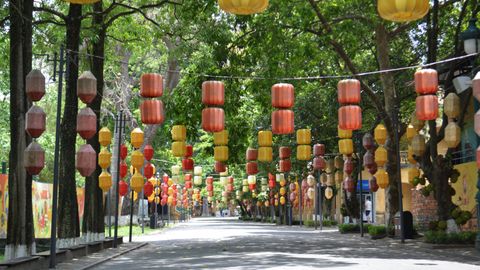
Look at a calendar of major festivals across cultures that had no contact with each other, and a pattern emerges. Large celebrations cluster around a handful of moments: the end of harvest, the turn of the year, the first fruits, and the point in late winter when stored food is running low and the days are lengthening.
This is not mysterious. It is what an agricultural year looks like from the inside.
The surplus problem
Before reliable preservation, a harvest created an immediate and awkward abundance. Grain stores reasonably well; a great deal else does not. Livestock could not always be kept through winter on available fodder, which meant slaughter, which meant meat that had to be eaten or preserved quickly.
A large communal feast is, among other things, an efficient way to deal with perishable surplus. It also distributes food across a community in a way that functions as insurance — a household that shares this year has a claim on others in a bad year.
Anthropologists have written extensively about feasting as a social technology: it builds obligation, displays status, settles disputes, arranges marriages and reinforces the relationships that a community will need when things go wrong.
The labour calendar
Agricultural work is not evenly distributed. There are periods of intense collective effort — planting, harvest — and periods when there is comparatively little to do.
Festivals sit in the gaps. The moment when the work is finished and before the next cycle begins is the only time a farming community can afford several days of doing nothing productive. It is also when people who have been working flat out for weeks need to stop.
This is why so many major festivals fall shortly after harvest and in the depths of winter, and why the busiest agricultural months are comparatively empty of celebration.
The gathering function
In dispersed rural populations, a festival is the mechanism that brings people together. That gathering does a lot of work beyond the celebration itself.
It is where marriages are arranged between families from different villages, which matters enormously for small populations. It is where trade happens, and where specialists — smiths, healers, musicians — travel to find customers. It is where news moves. It is where disputes between communities get aired in a setting with enough ceremony to keep them from escalating.
Take away the religious content and the practical infrastructure is still there.
Marking the year
Before printed calendars, the year had to be tracked and communicated. Festivals functioned as fixed points — a shared, memorable schedule that told everyone when to plant, when to move livestock, when to expect the rains.
Many traditional festivals are tied to observable astronomical events precisely because those are the reliable markers: solstices, equinoxes, the first appearance of a particular star, a particular moon.
The alignment of monuments across many cultures with solstice sunrise is often presented as mystical. It is at least equally a matter of needing a reliable annual reference point and building one that could not drift.
Why the food is specific
Festival foods are almost always things that are either seasonal at that moment, or expensive enough to be reserved for an occasion, or both.
Rich, fatty, sweet and labour-intensive dishes recur because those were exactly the things a household could not produce every day. The specialness was material before it was symbolic.
This is why festival food often seems excessive in a modern context, where the ingredients are available year-round. The dish has outlived the scarcity that made it a treat.
What happens when the agriculture goes
The interesting part. Across the world, harvest festivals persist in populations that no longer farm.
What survives tends to be the gathering, the food and the timing. What fades is the connection to the agricultural moment, which is why participants can often describe exactly what is done without being able to say why that particular date.
In some places the festival has been consciously revived as a marker of identity, sometimes decades after the practice lapsed. That is a different thing from continuous tradition and it is not less real for it — the reasons for gathering have changed, and the need to gather has not.
The underlying structure is remarkably stable: at some point in the year, a community stops working, eats more than usual, sees people it does not otherwise see, and marks the fact that the year has turned. The agriculture was the original occasion. It turns out not to have been the only one.
Also by Anahera Wetere
- What a heritage listing does to a placePlaces
- Lullabies are frequently not comfortingFolklore
- When one employer is the whole townPlaces
- The gift that has to be returnedFestivals & Ritual