Places
Delta cities: built on ground that is still arriving
A large share of the world’s biggest cities sit on river deltas, which are the most fertile, most connected and least stable ground available.
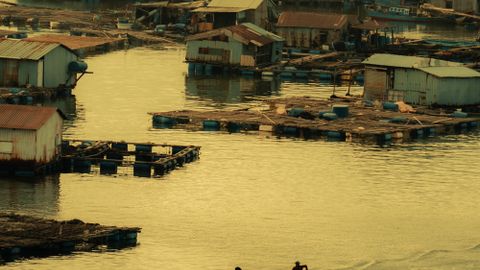
Deltas form where a river slows on meeting the sea and drops the sediment it has been carrying. The result is flat, extremely fertile land threaded with channels, at the junction of river transport and sea transport.
That combination is close to irresistible for settlement, which is why an enormous share of the world's population lives on deltas despite their being, in geological terms, temporary.
What makes them attractive
Soil. Delta sediment is fine, deep and renewed by flooding. Historically, delta agriculture supported population densities that upland farming could not approach.
Water. Fresh water in quantity for irrigation and domestic use.
Transport. A delta sits at the meeting point of a river system reaching far inland and a sea route reaching everywhere else. Every major delta has a port, and most have had one for a very long time.
Fisheries. The brackish transition zone is highly productive, and delta fisheries have supported large populations.
What makes them precarious
They are barely above sea level. Much delta land sits within a metre or two of high tide, and some is below it and protected by embankments.
They flood from both directions. River flooding from upstream rainfall, and storm surge from the sea. When both coincide, the consequences are severe.
They subside. Delta sediment compacts under its own weight, and the surface sinks. Under natural conditions this is offset by new sediment arriving with each flood.
They depend on sediment supply, which is exactly what upstream dams remove. Dams trap sediment in reservoirs, and the delta downstream stops being replenished while continuing to compact and to erode at the coast.
This is a well-documented process on several major deltas, where coastal land loss has been substantial and is attributed partly to reduced sediment delivery.
Groundwater extraction, which accelerates everything
Pumping groundwater from beneath a delta causes the ground to sink, sometimes dramatically. Several delta cities have recorded subsidence rates far exceeding sea level rise, meaning that locally the ground is falling faster than the sea is rising.
The consequences are cumulative and largely irreversible — compacted sediment does not re-expand when pumping stops. Cities that have restricted extraction have generally slowed subsidence rather than reversed it.
The engineering responses
Embankments and levees, the oldest approach. Effective and they create their own problems: a leveed river deposits sediment in its own bed rather than across the floodplain, so the bed rises, so the levees must rise, and the river ends up running above the surrounding land. When a levee fails in that situation, the flooding is worse than it would have been without any.
Barriers and storm surge gates, engineered to close against surges. Effective and expensive, and they require a functioning state to build and maintain.
Polders and pumping, reclaiming land below sea level and keeping it dry mechanically. Long-established in some deltas and it creates a permanent dependency on the pumps.
Room for the river, a more recent approach that gives water somewhere to go rather than trying to contain it everywhere — reconnecting floodplains, allowing controlled flooding of designated areas, and moving some settlement rather than defending it.
Sediment diversion, deliberately routing sediment-laden water into subsiding areas to rebuild land. Attempted on several deltas with mixed results, and it works against the interests of navigation and of existing communities in the diversion path.
The social layer
Delta populations are frequently among the poorest in their countries, and the most exposed. Informal settlement tends to occupy the lowest, wettest and least defended ground, because that is what is available.
So the people with the least capacity to relocate or to rebuild are the ones most affected by each flood, and the cumulative effect over repeated events is displacement.
Delta populations also include long-established communities with detailed local knowledge of water behaviour — where it goes, how fast, which routes stay open. That knowledge is frequently ignored in large engineering projects and frequently turns out to have been correct.
What is coming
Sea level rise, more intense storms, changing river flows from upstream climate and water use, and continued subsidence. The combination is not gradual — the practical effect is that the frequency of a given flood level increases sharply, so an event that occurred once a century begins occurring far more often.
Some delta cities are investing heavily in defence. Some are planning managed retreat from particular areas. At least one national government has begun relocating its capital away from a sinking delta city, which is an unusually direct response.
Whether the general approach is to hold the line or to move is being decided differently in different places, and the decisions are being made now, mostly by people who will not be there to see the outcome.
Also by Anahera Wetere
- What a heritage listing does to a placePlaces
- Lullabies are frequently not comfortingFolklore
- When one employer is the whole townPlaces
- The gift that has to be returnedFestivals & Ritual