Food Cultures
Hands, sticks and bread: how food is actually carried to the mouth
Eating implements are not a progression from primitive to civilised. Each system is fitted to the food it evolved alongside, and the rules around it are elaborate everywhere.
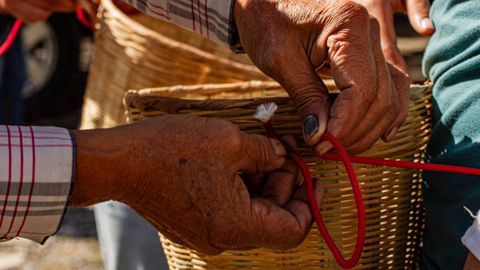
There are three broad systems for getting food from a dish to a mouth: hands, with or without bread as a tool; chopsticks; and cutlery.
Each is used by roughly comparable numbers of people, each has detailed rules, and each is fitted to the cuisine that developed with it.
Hands
Used across South Asia, the Middle East, much of Africa, parts of Southeast Asia and elsewhere.
The rules are substantial. In many traditions only the right hand is used for eating, with the left reserved for other functions — a distinction that is taken seriously and that visitors get wrong routinely.
How much of the hand is used varies. In several South Asian traditions, eating with the fingertips rather than the whole hand is the marker of good manners, and the technique for combining rice and sauce and lifting it cleanly is a genuine skill.
Bread is frequently the implement. Flatbread torn with one hand and used to pinch food is an efficient tool that is then eaten, and cuisines built around it — where sauces are thick enough to be picked up — are designed for the method.
Washing before and after is generally formalised, with vessels for the purpose and an order of who washes first.
Chopsticks
Used across East and Southeast Asia, with regional differences in material, length, shape and use.
Chinese chopsticks tend to be longer with blunter ends, suited to reaching across shared dishes. Japanese chopsticks are shorter with pointed ends, suited to fish. Korean practice frequently uses metal chopsticks with a spoon, and the spoon is used for rice and soup while the chopsticks handle other dishes.
The cuisine and the implement developed together. Food is cut into pieces in the kitchen rather than at the table, which is why a knife at the table is unnecessary and, in several traditions, considered inappropriate — the cutting is the cook's job.
The prohibitions are specific and worth knowing: not standing chopsticks upright in rice, which resembles funerary practice; not passing food chopstick to chopstick, for the same reason in several traditions; not using them to point, to spear, or to move dishes.
Cutlery
The knife-and-fork system is more recent than people assume.
Knives and spoons are ancient. The fork as a table implement spread across Europe relatively late, from the Mediterranean northward, and was met with resistance and ridicule for a considerable period before becoming standard.
Before it, meat was cut with a personal knife and eaten with the fingers and with bread, which places European practice closer to the hand-eating traditions than the current arrangement suggests.
The elaborate multi-implement place setting is a nineteenth-century development connected to a specific style of service, and much of the etiquette taught as timeless dates from that period.
Shared and individual serving
A more consequential distinction than the implement.
Where dishes are shared, the rules concern how to take from a communal dish — which part of it, with which implement, in what order, and how to serve others. Serving others before oneself is standard in many traditions, and reaching across the dish to a better piece is a breach.
Where each person has an individual portion, the rules concern the plate. Which is a fundamentally different social arrangement — shared dishes create a group; individual plates create a table of individuals eating simultaneously.
Communal eating from a single vessel, with each person taking from the section in front of them, is standard in a number of traditions and carries a strong statement about the group doing it.
Seating and order
Nearly universal: where people sit and who is served first encode status.
Age, gender, guest status and rank determine position, order of service, and which portions go to whom. In many traditions particular parts of an animal go to particular people, and getting this wrong is a genuine offence.
Whether guests should finish everything or leave something is a rule that differs sharply between traditions and produces reliable misunderstanding — leaving food indicating that enough was provided in some places and indicating dissatisfaction in others.
The vessels
Banana leaf, in parts of South and Southeast Asia — disposable, hygienic, and adding flavour when hot food is placed on it. Bread as both implement and plate in several traditions. Wooden bowls, gourds, metal trays, and the individual place setting.
Each shapes the meal. Food served on a leaf is arranged differently from food on a plate, and the order in which items are placed is frequently prescribed.
The point
None of these systems is more advanced than another, and the assumption that cutlery represents refinement is a specifically European idea exported with some force.
What all of them share is that eating is regulated. Every society has rules about it, they are learned in childhood, and violating them is noticed immediately.
Which suggests that the actual function is not efficiency but the demonstration of belonging — knowing how to eat correctly is how you show you were raised somewhere.
Also by Lena Farkas
- Street food is a system, not a categoryFood Cultures
- Children who grow up with three languagesLanguage & Words
- Famine foods and the knowledge nobody wants to needFood Cultures
- Whistled and drummed languages: speech carried across a valleyLanguage & Words