Food Cultures
Street food is a system, not a category
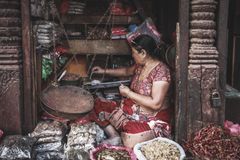
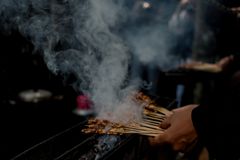
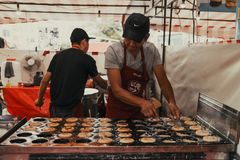
Cooked food sold in public space has existed as long as cities have, and it does specific work in a household economy that home cooking cannot.
Food Cultures
Cooked food sold in public space has existed as long as cities have, and it does specific work in a household economy that home cooking cannot.
Language & Words
Multilingual childhood is the global norm rather than the exception, and most of the anxieties attached to it in monolingual societies are not supported.
Food Cultures
Most food traditions include a set of things eaten only when there is nothing else, and that knowledge is among the first to disappear and the hardest to reconstruct.
Language & Words
In mountainous and forested regions, people developed ways to encode ordinary speech into whistles and drum tones that carry far beyond shouting range.
Food Cultures
Eating implements are not a progression from primitive to civilised. Each system is fitted to the food it evolved alongside, and the rules around it are elaborate everywhere.
Food Cultures
Honey was the only concentrated sweetener available to most of the world until quite recently, and the traditions around getting it range from cliff-face raiding to elaborate hive management.
Language & Words
They are not gestural versions of spoken languages, they are not universal, and they have grammar of a kind that spoken languages cannot easily produce.
Language & Words
The borrowed vocabulary in a language is a layered account of contact, and the layers can be dated and attributed with surprising precision.
Food Cultures
A substance people cannot live without, unevenly distributed, and essential for preserving food — which made it one of the most politically consequential commodities in history.
Language & Words
Performers in oral traditions recite epics far longer than anyone could memorise word for word. The explanation, worked out through fieldwork in the twentieth century, changed how scholars read ancient poetry.
Food Cultures
Filled and stretched dough appears across Eurasia in forms that are clearly related and whose relationships are much harder to trace than the confident stories suggest.
Folklore
Every language has them, they frequently contradict each other, and that contradiction is a feature of how they are used rather than a flaw.
Language & Words
Base ten is not inevitable. Languages have counted in twelves, twenties and sixties, and the traces of those systems are still in everyday vocabulary.
Food Cultures
A plant from the Ethiopian highlands, cultivated in Yemen, spread through the Islamic world and then everywhere else, taking a set of social institutions with it.
Food Cultures
Every cheese tradition is a response to a specific animal, climate, altitude and transport problem, and the differences between them are mostly practical.
Language & Words
The formulas people exchange on meeting carry almost no information and do a great deal of work, and the rules for getting them right are among the hardest parts of learning a language.
Language & Words
There is no linguistic criterion that reliably separates a language from a dialect. The distinction is made politically, and the politics are usually visible.
Festivals & Ritual
The year begins in January, in March, in April, in September, and on dates that move — depending on whether a calendar follows the sun, the moon, or a negotiation between them.
Food Cultures
Green, oolong, black and pu-erh all come from the same plant. The difference is entirely in what happens to the leaf in the hours after it is picked.
Food Cultures
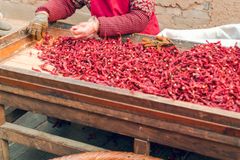
Sichuan, Thai, Korean and Indian cooking are unimaginable without chilli, and none of them had it five hundred years ago.
Language & Words
Naming systems encode kinship, geography, occupation and religion, and the modern assumption that everyone has a fixed first name and a fixed surname is unusual rather than natural.
Food Cultures
Sauerkraut, kimchi, pickled mustard greens, torshi, achar. Different flavours, different vegetables, one underlying process that people worked out independently again and again.
Language & Words
Roughly half the world’s languages have few enough speakers to be at risk. The efforts to keep them are less about dictionaries than about finding somewhere the language is needed.
Language & Words
Scripts move across languages far more readily than languages do, and every time one arrives somewhere new it has to be bent to fit sounds it was not designed for.
Food Cultures
The division between the world’s flatbread regions and its loaf regions tracks fuel, grain and oven design far more closely than it tracks anything cultural.
Language & Words
The internet loves a word that supposedly has no English equivalent. What is usually being demonstrated is not a gap in translation but a difference in what gets compressed into a single word.
Food Cultures
People carry starters across borders like relics, and the microbes inside them quietly rearrange themselves to suit the new flour, the new water and the new kitchen.