Places
Passes: the few places you can get through a mountain range
A mountain range is a wall with a small number of doors, and everything — trade, armies, languages, disease — has had to go through them.
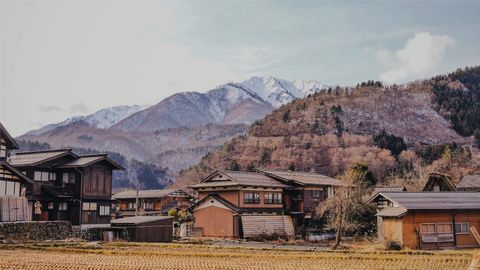
Where a range runs across a continent, the number of crossings that are practical for loaded animals or vehicles is generally small. Those crossings therefore concentrate everything that moves.
Which makes passes some of the most historically consequential pieces of ground anywhere.
What a pass concentrates
Trade, and with it the towns that grew at either end to service it — with inns, guides, animal changing, warehousing and customs.
Military movement. A pass is a chokepoint, which makes it defensible and makes control of it strategically valuable out of proportion to its size. A great many fortifications exist for no reason other than a pass below them.
Language and culture. Passes are where varieties meet. Communities at either end of a pass frequently have more in common with each other than with populations on their own side of the range, because they have been in contact for centuries.
Disease. Corridors that carry trade carry epidemics, and the historical record of disease spread frequently follows the same routes as commerce.
The physical constraints
A usable pass needs a combination of things: an achievable altitude, a gradient that loaded animals or wheeled vehicles can manage, approaches on both sides that are not blocked by gorges, water and fodder along the route, and a period in the year when it is open.
The last constraint is the one people underestimate. Many high passes are closed by snow for months, which means the trade using them is seasonal and the communities on either side are periodically isolated.
Avalanche is the recurring hazard, and the historical death toll on major passes is substantial. Hospices and refuges along high routes were built precisely because travellers died, and several religious orders have long histories of maintaining them.
The improvements
Passes have been engineered for as long as states have been interested in them.
Paved and graded roads, retaining walls, bridges over ravines, galleries built against avalanche paths, and hospices at the summit.
Then, from the nineteenth century, tunnels — which change everything. A rail or road tunnel beneath a pass removes the altitude, removes the seasonality, and removes the reason for the towns at either end.
The economic effects of tunnelling on pass communities have been consistent: the traffic goes underground and the settlements that lived on it decline, unless they can find another reason to exist.
The border question
Ranges make convenient borders, and a great many international boundaries follow watersheds. Which means passes are frequently crossings in the legal sense as well as the physical one.
That produces the familiar border-town features at pass level: customs posts, queues, and communities whose lives straddle a line that runs over the summit.
It also produces disputes, since watershed boundaries are less precise on the ground than on a map, and passes are exactly where the ambiguity matters.
The people who worked them
Pass economies supported specialist occupations: porters, muleteers, guides, and in some regions people whose specific job was carrying travellers or goods across the difficult section.
Many of these were seasonal, filling the months when high farming was impossible, and they formed a substantial part of the household income in communities that could not live on agriculture alone.
Where mechanised transport arrived, those occupations disappeared quickly, and the loss of that seasonal income is a documented factor in upland depopulation.
What passes do to language
A pass is simultaneously a barrier and a conduit, which produces complicated linguistic geography.
The range divides, so varieties on either side diverge. The pass connects, so the communities immediately adjacent to it converge. The result is frequently a pattern where dialect boundaries follow the ridgeline except in the vicinity of the crossings, where they bulge across.
Trade over passes also produces specialised vocabulary — for the goods, the animals, the equipment and the weather — that is shared across the range and not found further from it.
Now
Most major passes have been superseded by tunnels for freight and for winter traffic, and survive as summer routes for tourism.
That has kept some of them economically alive, with the hospices and inns serving walkers and cyclists rather than muleteers, and with the old road maintained as a scenic route rather than as infrastructure.
The physical evidence is generally still there for anyone walking one: the paving, the retaining walls, the boundary stones, the ruins of the customs post, the chapel at the summit, and the graves. A pass road read carefully is a fairly complete account of what has moved across a range and what it cost.
Also by Anahera Wetere
- What a heritage listing does to a placePlaces
- Lullabies are frequently not comfortingFolklore
- When one employer is the whole townPlaces
- The gift that has to be returnedFestivals & Ritual