Places
Cemeteries Are Land Use, And Cities Argue About Them
Burial grounds occupy permanent space in growing cities, and the resulting conflict between the dead and the living has reshaped urban edges repeatedly.
A burial ground is the one land use that is expected never to be reused. In a growing city that assumption collides with everything else, and something has to give.
The central churchyard filled up
Older towns buried within the settlement, in ground attached to a place of worship, and those plots were sized for a population that then grew many times over.
The response was reuse. Ground was dug repeatedly, older remains were moved to storage, and the level of the ground rose noticeably above the surrounding street.
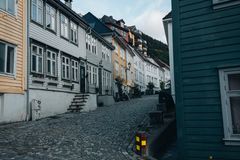
Raised churchyards in old towns are a direct physical record of that, since the accumulated material had nowhere to go and simply built upwards.
Moving burial to the edge
Overcrowding and disease concerns eventually pushed burial out of city centres to large sites beyond the built-up area, laid out as designed landscapes.
Those sites were chosen for cheap land at the edge, which is precisely the ground that later development reached, so many are now well within the city.
Being large, green and legally protected, they became de facto parks, and in many cities they are among the oldest continuous open spaces available.
Permanent tenure against limited land
Systems differ sharply on whether a grave is held forever or for a term, and that single rule determines how much land a city must keep committing.
Where tenure is limited, plots are reused after a period, with remains gathered and relocated, which keeps a fixed area serving an indefinite population.
Where tenure is permanent, the area must grow continuously, and cities operating that way eventually face a shortage that is genuinely difficult to resolve.
Cremation changed the arithmetic
Where cremation became common, the land requirement fell dramatically, since remains take a fraction of the space and many are not interred at all.
The shift was frequently contested on religious grounds and adopted at very different rates, which is why neighbouring regions can have quite different burial landscapes.
Memorial gardens and walls developed to replace what the grave provided, since a place to visit is a separate need from a place to put remains.
What gets built over
Cities have repeatedly built on former burial ground, sometimes with removal and sometimes without, and construction in old urban centres encounters this regularly.
The resulting disputes involve descendants, religious authorities, archaeologists and developers, and they are among the slower planning conflicts to resolve.
Where a site has been built over, the memory frequently persists in a street name or a local account, which is often the first indication that anything is there.
Also by Anahera Wetere
- What a heritage listing does to a placePlaces
- Lullabies are frequently not comfortingFolklore
- When one employer is the whole townPlaces
- The gift that has to be returnedFestivals & Ritual