Places
The weekly market and the town it built
A great many towns exist because someone was granted the right to hold a market there, and the physical shape of those places still shows it.
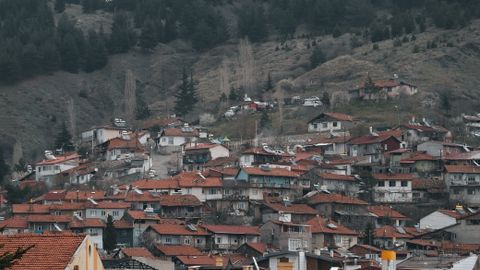
Walk into an old European town and there is a good chance the widest street or the largest open space is a market place, that the church faces it, and that the street pattern radiates outward from it.
That is not aesthetic. It is the town's original function, still legible.
The market as a legal privilege
In medieval Europe, the right to hold a market was granted — by a monarch, a bishop or a lord — and it was valuable. The holder collected tolls from traders and fees from stalls, and the market drew people, which drew more trade.
Grants frequently specified the day, and neighbouring markets were often required to be a certain distance apart or on different days, since two markets competing for the same traders benefited nobody. In some jurisdictions the customary reasoning involved how far a person could travel to market and home again in a day.
That constraint produced a spacing of market towns across the landscape that is still visible on a map. The distances between old market centres in long-settled regions are remarkably regular, and they correspond to a day's return journey on foot or with a cart.
What the market place had to have
Space, obviously — a wide street, a triangular junction, or a formal square. In some towns the market has been built over as temporary stalls became permanent shops, leaving an island of buildings in the middle of what was once open ground. That pattern is a reliable indicator of a former market space.
A market cross or a covered hall, marking the legal boundary of the market and its regulations. Trading inside the boundary was subject to the market's rules and tolls; trading outside it was not.
Standards for weights and measures, usually held by the town, and a mechanism for checking them. A market's value depended on traders trusting it.
A court. Many markets had a summary court to resolve disputes on the day, since traders would leave the next morning. The names for these vary by region and the function was consistent: fast, local, cheap justice for commercial disputes.
Inns, in quantity, for traders travelling in and staying overnight.
Beyond Europe
The pattern is not European. Periodic markets on fixed cycles are documented across West Africa, Mesoamerica, China and elsewhere, frequently with cycles that are not seven days.
Rotating market systems, where a group of settlements host the market in turn on successive days, are widespread. They let traders make a circuit, serve a larger population than any single village could support, and share the benefit around.
In several West African traditions, the market cycle and the calendar are linked — the days of the week are named after the markets, or the market cycle defines the week. That is an inversion worth sitting with: the market is not scheduled by the calendar, it is the calendar.
The market as a social institution
Trading was not the only function and frequently not the main one.
Markets were where news arrived, where labour was hired, where marriages were arranged, where announcements were made, where disputes were settled, and where people from scattered farms saw anyone outside their own household.
They were also, in many places, one of the few spaces where women traded independently and controlled income, which in several West African societies produced market women's associations with real economic and political weight.
What killed most of them
Not one thing. Railways redirected trade toward stations. Refrigeration and improved transport meant produce did not need to be sold locally within a day. Permanent shops replaced periodic stalls. Then supermarkets, then out-of-town retail, then online.
Each step removed a reason to be in the market place on a Tuesday, and the market places emptied. Many became car parks, which is a fair indication of what a town has decided its centre is for.
What is coming back, and what is not
Farmers' markets and periodic markets have returned in a lot of places, and they are a different institution from the one they resemble.
The historic market was where you bought your food because there was nowhere else. The contemporary one is a supplementary shopping choice, generally more expensive, serving a customer who has alternatives. That is not a criticism — it supports small producers and it brings people into town centres — but it is not a revival of the same thing.
What has come back more genuinely is the social function. A weekly market gives a town a day when its centre is busy and people meet, and in places that have lost their shops, that turns out to be worth something independent of the trade.
Also by Anahera Wetere
- What a heritage listing does to a placePlaces
- Lullabies are frequently not comfortingFolklore
- When one employer is the whole townPlaces
- The gift that has to be returnedFestivals & Ritual