Places
Why Vineyards Sit On Awkward Slopes
Vines are planted on steep, stony ground that suits nothing else, because drainage, sun angle and stored heat matter more to the crop than soil fertility does.

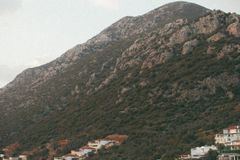
Vineyard country is usually terrain a farmer would otherwise reject. Steep, thin and stony ground produces the results, and the reasons are physical rather than traditional.
The vine wants poor drainage-free ground
Vines root deeply and tolerate drought, so they do not need the moisture-retaining soil that most crops require, and they perform badly where water sits.
Rich soil produces vigorous leaf growth at the expense of fruit concentration, which is the opposite of what the grower wants, so fertility is a disadvantage.
Stony ground drains fast and forces the roots down, which stabilises the vine's water supply and reduces the effect of a wet or dry spell at the surface.
Slope angle is about sunlight
A slope facing the sun receives light at a steeper angle than flat ground at the same latitude, which delivers more energy per unit area through the growing season.
That difference is decisive at the cool margins of cultivation, where a south-facing slope ripens fruit and level ground nearby does not.
The effect explains why vineyard regions often occupy one side of a valley almost exclusively, with the opposite slope in woodland or pasture.
Stored heat and moving air
Stone and water store heat during the day and release it overnight, which moderates temperature swings and extends the effective growing period.
River valleys benefit from this twice, gaining reflected light off the water and warmth released from it, which is why so many vineyard regions follow rivers.
Slopes also drain cold air downhill, so frost settles on the valley floor while the mid-slope stays above it, and the best sites often sit in a band rather than at the top.
The labour cost of steepness
Steep vineyards cannot be worked by machine, so everything is done by hand, and the labour requirement per unit of land is many times that of flat ground.
Terracing reduces the difficulty and introduces walls that must be maintained indefinitely, which adds a permanent cost unrelated to the crop.
That is why steep sites are abandoned first when labour becomes expensive, regardless of the quality they produce, and why some famous slopes have gone to scrub.
Boundaries drawn very finely
Because slope, aspect and soil change over short distances, vineyard boundaries in old regions are drawn at a fineness that looks excessive from outside.
Those divisions usually record observed differences accumulated over generations, with plots separated because their produce behaved differently year after year.
Formal classification systems later fixed those observations in law, which turned a working knowledge of a hillside into a permanent map with economic force.
Also by Anahera Wetere
- What a heritage listing does to a placePlaces
- Lullabies are frequently not comfortingFolklore
- When one employer is the whole townPlaces
- The gift that has to be returnedFestivals & Ritual