Food Cultures
Flatbread, leavened bread, and the oven that decided which
The division between the world’s flatbread regions and its loaf regions tracks fuel, grain and oven design far more closely than it tracks anything cultural.
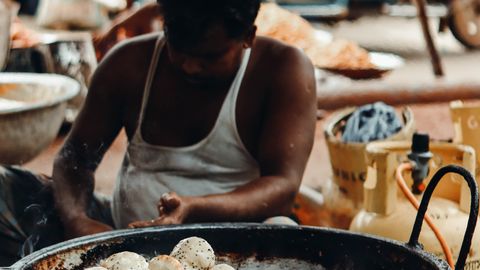
Bread is close to universal wherever grain is grown, and it takes two broad forms: thin breads cooked quickly at high heat, and risen loaves baked slowly in an enclosed chamber.
The distribution is not random and it is not primarily a matter of taste.
Fuel is the first constraint
A risen loaf requires an oven brought up to temperature and held there for a substantial period. That is a large quantity of fuel spent on a single batch, and it only makes sense if you are baking a lot at once or if fuel is abundant.
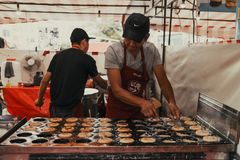
A flatbread cooks in one to three minutes on a hot surface. It can be made on a griddle over a small fire, on the inside wall of a clay oven, on a heated stone, or on an inverted metal dome. Fuel requirement is minimal and it can be produced one at a time, on demand.
In regions where wood was scarce — much of the Middle East, North Africa, the Iranian plateau, parts of Central Asia — the economics favour flatbread decisively. In forested northern Europe, where fuel was comparatively plentiful, the enclosed oven and the large loaf make sense.
The communal oven, found across many societies, is the intermediate solution: one fire, one heating, many households' bread. It is also, not coincidentally, a social institution — a place people met daily, whose remains turn up in villages across the Mediterranean and beyond.
The grain matters
Wheat contains gluten-forming proteins that produce an elastic dough capable of trapping gas. That is what allows a loaf to rise and hold its structure.
Rye contains less and behaves differently, producing the dense, sour, long-keeping breads of northern and eastern Europe — which are risen, but by a different mechanism, relying heavily on acidity from sourdough fermentation to manage the starches.
Barley, sorghum, millet, maize and teff have little or no gluten. Breads made from them are flat, or thin and fermented like injera, or cooked as porridges and cakes. The form follows the protein.
Which is why the great leavened-loaf regions overlap so closely with the wheat and rye regions, and why the flatbread and porridge regions overlap with everything else.
Storage and staleness
A large loaf keeps for days and, in the case of dense rye, weeks. That suits a household baking once or twice a week, and it suits a climate where preservation is a concern.
A flatbread is at its best within minutes and stales fast, which suits daily or twice-daily baking. In many flatbread cultures, bread is bought or made fresh every day, and the entire food culture assumes it.
Both traditions developed elaborate ways of using bread past its best — the flatbread soaked in stew, the dried bread crumbled into soup, the stale loaf turned into puddings and dumplings. A surprising proportion of famous regional dishes exist because bread had to be used up.
The oven types, briefly
The clay dome oven, in many local forms, heated by a fire inside, swept out, and used with retained heat. Excellent for loaves.
The vertical clay oven found from the Caucasus through Central and South Asia, where dough is slapped onto the inner wall and peeled off when done. Extremely efficient and it produces a distinctive blistered surface.
The griddle, flat or convex, in metal or stone, from Mesoamerica through South Asia. Minimal fuel, instant heat.
The hearth and ash, the oldest method — dough baked directly on hot stones or buried in embers. Still used, and it produces very good bread.
Each of these shapes the bread that comes out of it, and the breads are frequently unrecognisable to each other despite identical ingredients.
Bread as social fact
In most bread cultures, the bread carries weight beyond nutrition. It is the item on the table that everyone shares from. It is what is torn rather than cut. It is treated with a respect that other foods are not — not dropped, not thrown out, sometimes kissed if it falls.
The vocabulary follows. In many languages the word for bread stands in for food generally, or for livelihood, or for the household. Compounds and idioms built on it are usually among the oldest in the language.
That weight has a straightforward source. For most people through most of history, grain provided the large majority of daily calories, and bread was the form it took. Everything else on the plate was, in the strict sense, accompaniment.
What is changing
Industrial baking has flattened a great deal of regional variation, and in many places the local bread is now a specialist product rather than the default.
At the same time, the reverse is happening in patches: revived interest in older grains, in longer fermentation, and in the specific breads of specific places. Whether that constitutes preservation or reinvention depends on the case, and often on whether anyone was still baking when the interest arrived.
Also by Lena Farkas
- Street food is a system, not a categoryFood Cultures
- Children who grow up with three languagesLanguage & Words
- Famine foods and the knowledge nobody wants to needFood Cultures
- Whistled and drummed languages: speech carried across a valleyLanguage & Words