Festivals & Ritual
Fasting Is What Makes The Feast Legible
Periods of restriction and periods of abundance are two halves of one calendar, and the feast reads as a feast only against the restraint that preceded it.
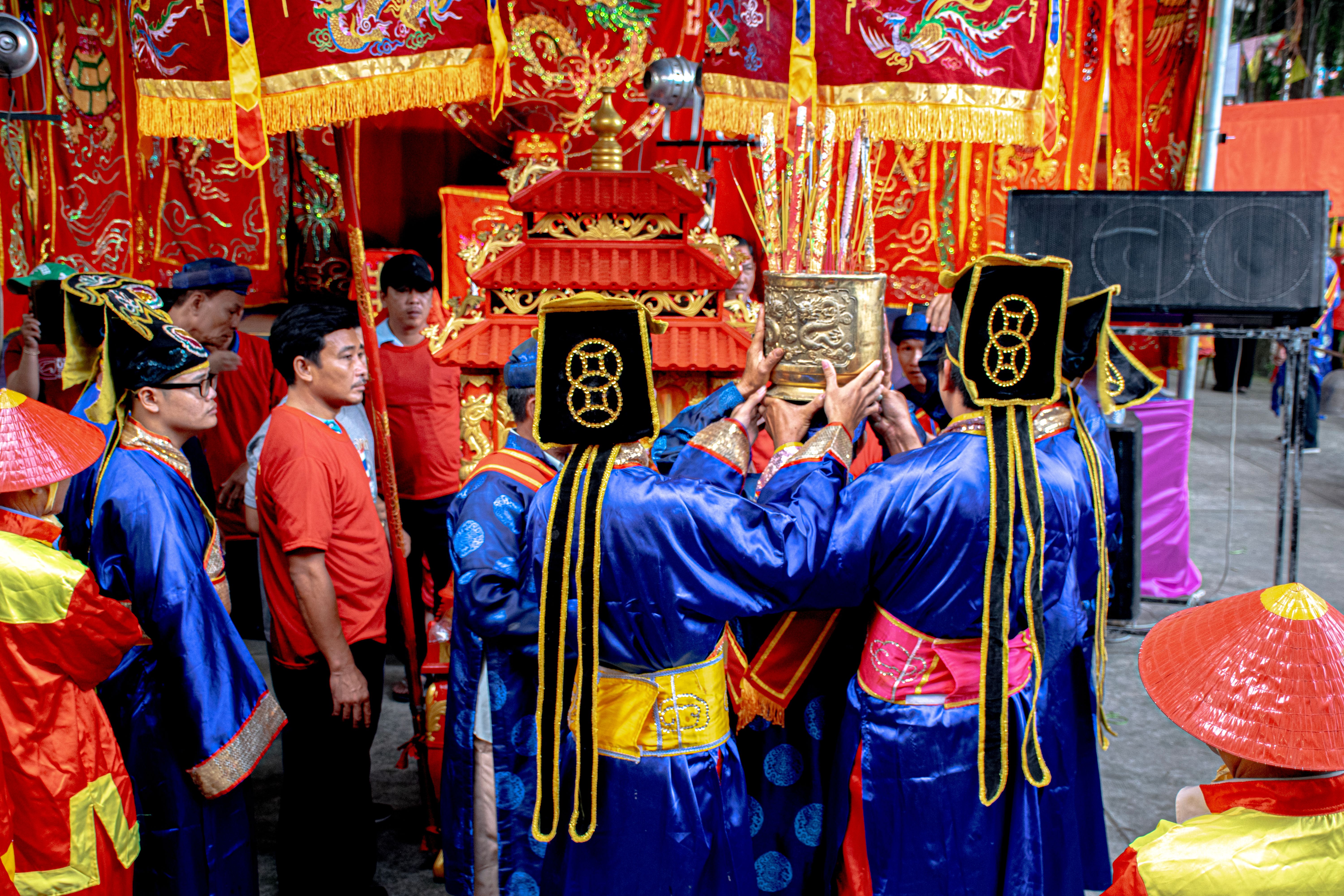
Feast days are usually discussed on their own. They are better understood as the release end of a cycle whose other half is a defined period of going without.
The calendar had lean seasons anyway
Before storage and transport smoothed supply, there were months when food was genuinely short, typically before a harvest and after winter stores had run down.
Ritual restriction frequently sits exactly there. A period of abstinence coincides with the time when there was least to eat, which converts scarcity into observance.
That alignment is practical as well as symbolic. A community that eats less by rule when stores are low arrives at the harvest with something left.
What restriction actually involves
Complete abstention from food is rare and usually short. Most traditions restrict categories instead, removing meat, fat, dairy or particular grains for a defined stretch.
Timing restrictions are equally common, confining eating to certain hours rather than reducing the total. The discipline lies in the schedule rather than the quantity.
Either way the restriction is collective and dated. It is not an individual choice, and its visibility is part of what makes it function socially.
The cuisine that restriction creates
Long-standing dietary restrictions produce whole categories of dish designed to work around them, and those dishes often become the most distinctive food a region has.
Pulse and vegetable cooking tends to be most developed where meat was periodically excluded, because the same cooks had to produce satisfying food without it repeatedly.
Substitutes get invented in the same way. Preparations that stand in for a forbidden ingredient are a recurring feature and some have outlived the restriction entirely.
The day before and the day after
Restriction periods are commonly preceded by a day of using up what is about to become forbidden, which is where several rich traditional dishes come from.
This was straightforwardly practical. Perishable food that could not be eaten for weeks would spoil, so it was consumed at once, in quantity, and the meal became an occasion.
The breaking of the restriction is then the larger feast, and it is usually the most elaborate meal of the year, because it has an entire season built up behind it.
Why the pattern weakens
Where supply is constant and restriction is optional, the cycle flattens. A feast that is not preceded by scarcity is just a large meal among many large meals.
Communities that keep the restriction report that the feast retains its force, which is consistent with the two halves working as a single mechanism rather than separately.
The dishes usually survive longer than the discipline. Restriction food ends up eaten year-round, which is a quiet sign that the calendar behind it has stopped operating.
Also by Lena Farkas
- Street food is a system, not a categoryFood Cultures
- Children who grow up with three languagesLanguage & Words
- Famine foods and the knowledge nobody wants to needFood Cultures
- Whistled and drummed languages: speech carried across a valleyLanguage & Words