Festivals & Ritual
Funerals Are Organised Around The Living
Death rites do their real work on the survivors, structuring a period of disruption, allocating obligations and returning the household to ordinary life on a defined schedule.
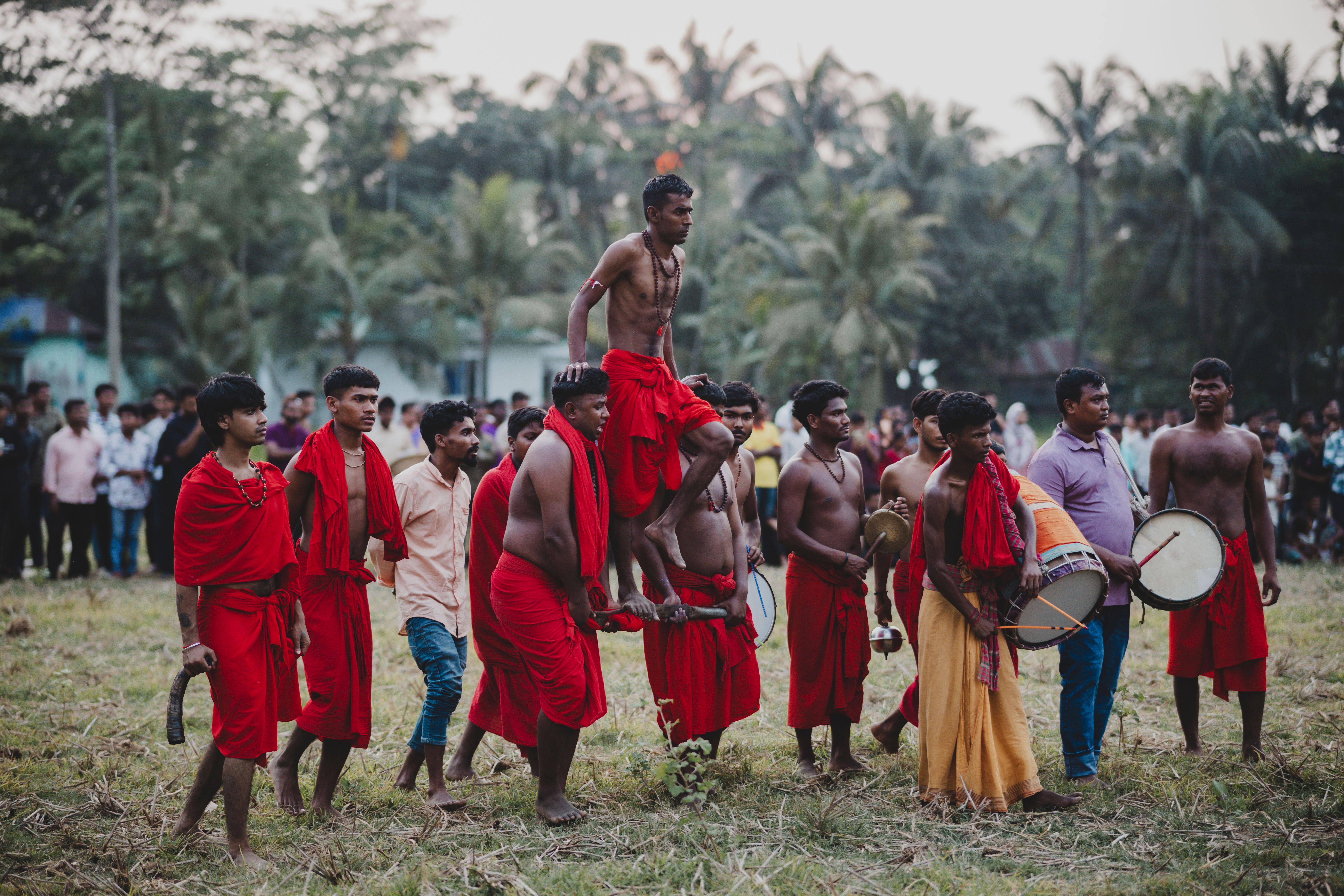
Funeral customs vary enormously in form and remarkably little in function. Almost all of them manage a period of disorder among the living and then bring it to a formal end.
The period is bounded on purpose
Mourning is nearly always given a defined length, marked by stages, with restrictions that ease at set points rather than fading at each person's own pace.
That structure removes a decision. Nobody has to judge when it is acceptable to work, to eat normally or to appear in public, because the calendar has already decided.
The end is usually marked by a specific event, often a meal or a second gathering, after which the restrictions are lifted and the household resumes ordinary standing.
Visible signs tell others how to behave
Mourning dress, altered hair, removed jewellery and marked houses all serve the same purpose, which is to inform everyone else of the household's state without conversation.
Those signs govern the behaviour of others. People know not to invite, not to celebrate nearby and not to press for business, and the bereaved do not have to explain repeatedly.
As the stages progress the signs are reduced, which announces the change publicly and lets ordinary interaction resume without an awkward negotiation.
Obligations are allocated precisely
Death rites specify who does what. Particular relatives wash the body, carry it, speak, provide food or bear costs, and the assignments follow kinship rules rather than volunteering.
This distributes work at a moment when the closest family is least able to organise anything, and it does so without anyone having to ask.
It also functions as a claim. Performing the assigned role publicly asserts a relationship, which matters for standing and sometimes for inheritance.
The feeding of the mourners
Almost universally, a death produces a meal, provided by neighbours or by the extended family rather than the household directly affected.
The practical logic is plain, since the household cannot cook and will have many visitors. The social logic is that participation is registered by contribution.
These meals often have their own conventional dishes, chosen because they can be made in quantity, transported, and served to whoever arrives without a fixed guest list.
The second rite
Many traditions hold a further ceremony months or years later, sometimes involving the remains and sometimes only a gathering.
By then the immediate disruption has passed, and the second event confirms the change permanently. The deceased moves from recently dead to ancestor, which is a different category.
It also serves the survivors' standing. The second rite is usually more public and more expensive, and completing it discharges the family's last obligation.
Also by Lena Farkas
- Street food is a system, not a categoryFood Cultures
- Children who grow up with three languagesLanguage & Words
- Famine foods and the knowledge nobody wants to needFood Cultures
- Whistled and drummed languages: speech carried across a valleyLanguage & Words