Festivals & Ritual
Processions Move Through A Town For A Reason
The route a procession takes is rarely the shortest one, because the purpose is to pass particular places, mark boundaries and be seen by particular people.

A procession looks like a crowd going somewhere. The route is usually the most carefully preserved part of the whole event, and it is not chosen for efficiency.
The route is the content
Processional routes typically pass a fixed set of points, which may include old boundaries, particular buildings, water sources or the houses of specific families.
Passing those points is the ritual act. Shortening the route to save time removes the parts that mattered, which is why communities resist changes that look practical.
Where a building on the route has gone, the procession often still stops where it stood. The stop outlives its object, and the memory is maintained by the pause itself.
Marking territory by walking it
Many processions trace a boundary. Walking a perimeter in company establishes where it runs and does so publicly, in front of witnesses who will remember.
Before reliable maps, that was a functional record. Disputes could be settled by the testimony of people who had walked the line, and children were brought along to extend the memory.
Where such a walk still exists, it often preserves an administrative boundary that was superseded long ago, which makes the route a piece of surviving documentation.
Order in the line means something
Who walks where is rarely casual. Position by trade, by family, by age or by office is normally fixed, and disputes about precedence are a recurring feature of these events.
The order makes the community's structure visible in a single glance. Anyone watching can see who holds what standing, and any change is immediately noticed.
That visibility is why participation is defended so vigorously. A group excluded from the line, or moved down it, has lost something publicly.
Who watches and from where
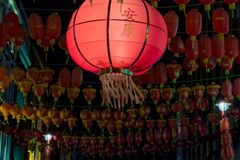
A procession requires spectators to work, and the route is chosen partly so that the maximum number of households can see it from their own doors.
Watching is not passive. Spectators contribute noise, offerings, decoration and refreshment, and houses along the route take on obligations for the day.
Streets are dressed for the passage, sometimes elaborately, and the decoration is often removed immediately afterwards, since it existed for the few minutes of passing.
What happens when the route is blocked
Road building, new development and traffic management all interfere with old routes, and the resulting arguments are usually more heated than outsiders expect.
Communities faced with an impassable section will divert as little as possible, rejoining the original line at the first opportunity rather than redesigning the whole walk.
Where a route has been broken permanently, the event often weakens quickly. Without the sequence of places, the walk becomes a parade, and the reason for it becomes hard to explain.
Also by Lena Farkas
- Street food is a system, not a categoryFood Cultures
- Children who grow up with three languagesLanguage & Words
- Famine foods and the knowledge nobody wants to needFood Cultures
- Whistled and drummed languages: speech carried across a valleyLanguage & Words