Craft Traditions
Mending as a visible act
Several traditions repair objects in ways that draw attention to the break rather than hiding it, and the reasoning behind them is more practical than the current framing suggests.
Craft Traditions
Several traditions repair objects in ways that draw attention to the break rather than hiding it, and the reasoning behind them is more practical than the current framing suggests.
Craft Traditions
Vernacular building uses materials available within a short distance, and the resulting forms are so closely fitted to local conditions that they change over remarkably small distances.
Craft Traditions
Traditional boatbuilders work by eye and by proportion, producing hulls of considerable subtlety, and the knowledge is held in the shape of the shed rather than on paper.
Craft Traditions
Instrument makers select material by tapping it, and the traditions that developed around particular timbers, skins and metals are among the most conservative of any craft.
Craft Traditions
In many traditions, a stitched garment identified a village, a marital status and a family, and could be read by anyone who knew the vocabulary.
Craft Traditions
Glassmaking required sustained heat well beyond what most crafts needed, and the techniques for shaping it were guarded closely enough to be a matter of state policy.
Craft Traditions
Turning skin into leather is a chemical process that takes weeks, smells appalling, and was essential enough that every settlement had someone doing it downwind.
Food Cultures
A terraced hillside is a water management system built over centuries, and it collapses within a decade or two if the community maintaining it leaves.
Craft Traditions
Smiths occupy an unusual social position in a striking number of societies — essential, powerful, and frequently set apart in ways that are not entirely respectful.
Craft Traditions
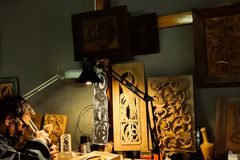
Buildings and furniture assembled entirely from shaped wood, without nails, screws or glue, have stood for centuries — and the reasons are structural rather than aesthetic.
Craft Traditions
Handmade paper is a deceptively simple process — fibre, water, a screen — and the traditions built on it differ enormously depending on which plant was available.
Craft Traditions
Baskets predate pottery, survive badly in the archaeological record, and are still made by hand in more places than almost any other craft.
Craft Traditions
Before synthetic dyes, a strong, permanent red was one of the most valuable things a textile worker could produce, and the sources for it moved across the world as commodities.
Craft Traditions
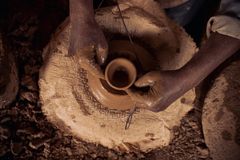
Throwing on a wheel is the image everyone has of pottery. Most of the world’s ceramic traditions were built without one, and the difference goes beyond technique.
Craft Traditions
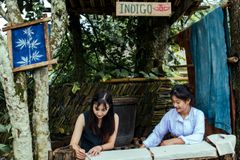
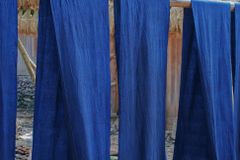
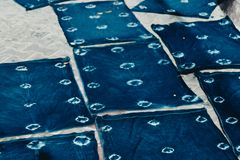
Fermentation indigo dyeing is not a recipe so much as a relationship with a population of bacteria that has to be fed, warmed and kept slightly hungry.